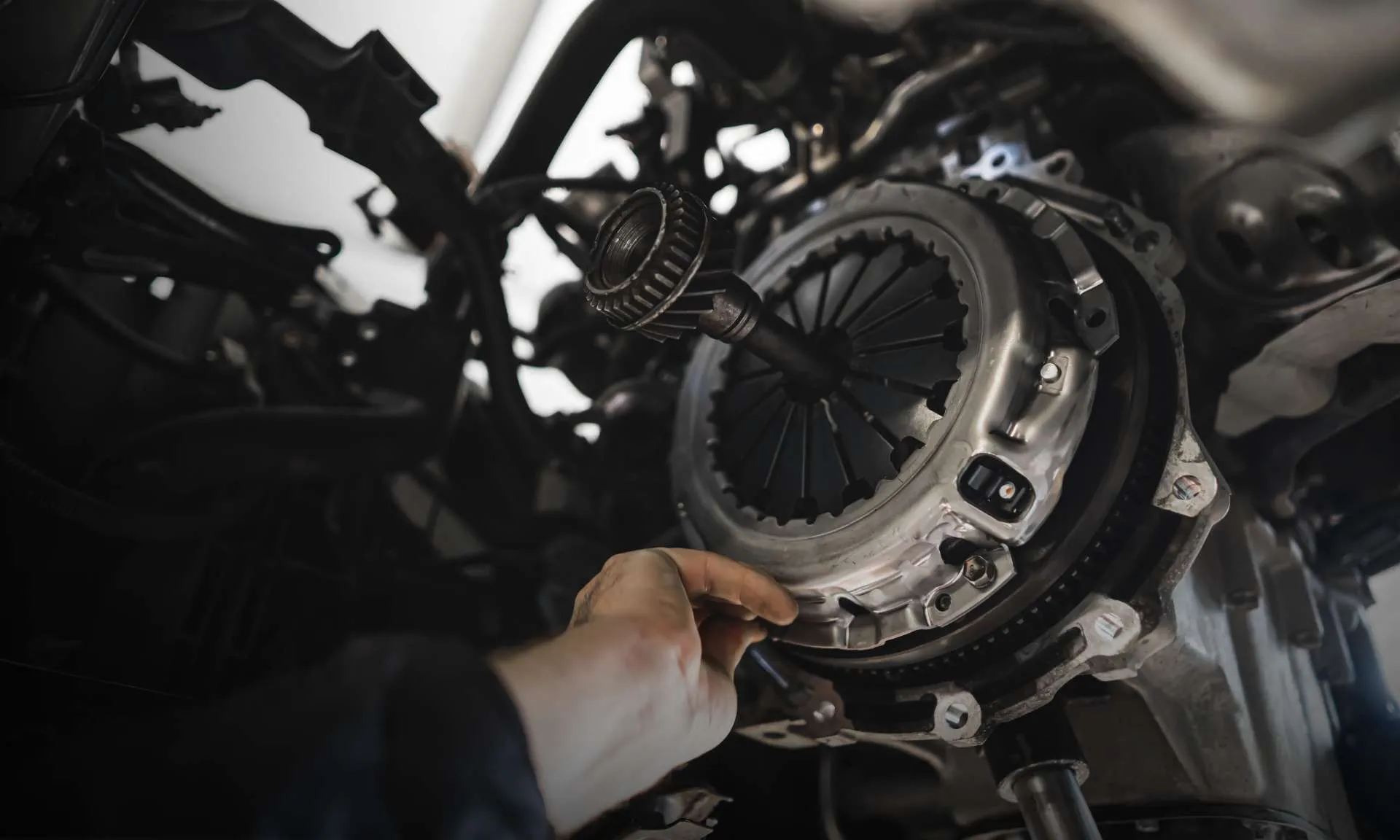
When your clutch slips: signs and replacement
You accelerate onto a slip road, the engine revs climb but the car does not really pick up speed. Sometimes a burning smell comes with it. That is often the first sign of a slipping clutch. The clutch links the engine to the gearbox and wears slowly, generally between 80,000 and 100,000 km. This article covers how to recognise a worn clutch, and when to replace it.
If you feel the clutch slipping or the gears are hard to engage, a check saves you from damaging the gearbox: find your nearest MOTRIO garage and have the clutch inspected.
How to tell if your clutch is worn: the warning signs
The clutch transfers the engine's torque to the wheels through a friction disc that presses against the flywheel. When the lining wears down, the disc grips less and starts to slip: that is clutch slip.
The clearest symptom is that slip: engine revs rise without the speed following, especially in fourth or fifth gear and on hills. Other signs often come with wear: a pedal that feels unusually hard or, conversely, too soft, gears that crunch, particularly first and reverse, or a burning smell after a hill start.
A simple test helps confirm it. On level ground, apply the handbrake firmly, select third gear and gently release the clutch as if pulling away. If the engine stalls at once, the clutch is still healthy; if it takes a while or does not stall, the disc is near the end of its life. On many recent engines, especially diesels, the clutch is paired with a dual-mass flywheel: driving for too long with a slipping clutch overheats it and can damage this part.
The bite point gives another useful clue. On a healthy clutch the car starts moving around the middle of the pedal travel; if you have to release it almost fully to pull away, the disc is already thin. A hill start that needs more revs than usual is another sign worth noting.
Some habits wear the clutch faster: resting your foot on the pedal while driving, holding the car on the bite point in traffic or on a hill instead of using the brake, and harsh launches with the engine revving. Towing loads beyond the car's limits also puts the disc under strain.
The clutch can be hydraulically or cable operated: on hydraulic systems, a leaking slave or master cylinder causes a spongy pedal that feels like a worn clutch. A metallic rattle at idle that disappears when you press the pedal often points to a dual-mass flywheel near the end of its life rather than the disc.
When to replace a clutch
A clutch is not replaced at a fixed interval: you act when symptoms appear. But the wear is irreversible and speeds up over time, so it is best not to wait too long. Town driving, full of stop-start traffic, wears the clutch faster than motorway use.
Replacement is a major job that means removing the gearbox, so the full kit (disc, pressure plate and release bearing) is usually replaced in one go rather than the disc alone. Vibration or other odd behaviour can have different causes, such as worn shock absorbers, so a diagnosis avoids replacing a part for nothing. Given the complexity, this is a job for a professional with a ramp and the right tools.
Driving with a little care extends clutch life. Change gear firmly but smoothly, never use the clutch to hold the car on a hill and lift your foot off the pedal as soon as the gear is engaged. On a clutch that is already tired, avoiding aggressive starts buys you time before replacement.
It pays to get a diagnosis before any work: similar symptoms can come from the flywheel, the release cylinder or the linkage. A technician checks the whole system and tells you whether the clutch alone is enough or whether the dual-mass flywheel should be replaced too, so you avoid redoing the same job soon after.
Before the work, ask for a detailed quote. Using the replacement to check the gearbox oil seal and engine mounts, often only reachable at that point, avoids reopening everything soon after for a nearby problem.
Clutch inspection and replacement at a MOTRIO garage
MOTRIO garages, an independent network within Renault Group, pinpoint the cause before any work and replace the clutch with parts suited to your car, flywheel included where needed, backed by a 1-year warranty on parts and labour. Building the check into your regular service helps keep an eye on it.
If the clutch is slipping or the pedal feels different, act before it fails: book at your nearest MOTRIO garage for a diagnosis and a transparent quote.