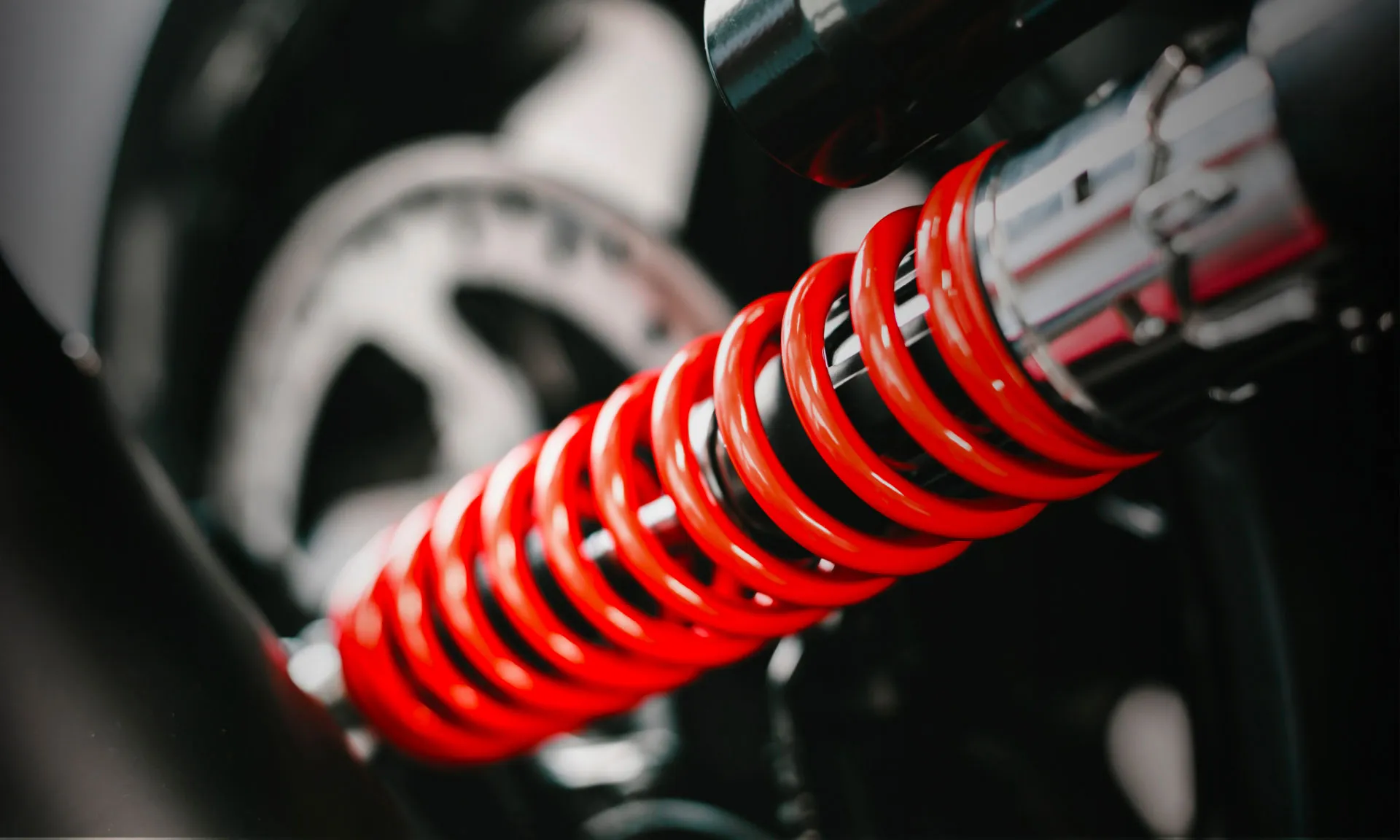
Car Shock Absorber: How Much Does Replacement Cost?
Shock absorber wear is easy to miss because it builds up slowly. The car dips a little more at the front under braking, takes corners with slightly less confidence, bounces twice instead of once over a speed bump. These changes happen over weeks or months, and you adapt to them without realising the car is no longer handling as it should. It is often a passenger, or a failed MOT, that finally brings it to your attention. By that point, you have probably been driving on worn shock absorbers longer than you should have, without knowing what it would cost to sort it.
How DoYou Know If Your Shock Absorbers Are Worn?
The simplest test remains the bounce test. Press down firmly on the bonnet or the boot, release, and observe. A shock absorber in good condition will stop oscillating after a single rebound. If it bounces two or three times before stabilising, it is no longer absorbing shocks properly. It is not a laboratory test, but it provides a reliable first indication in about thirty seconds.
On the road, the signs are more subtle but very real. A car with worn shock absorbers will tend to dive forward under braking, lean excessively in corners, and bounce on uneven surfaces instead of absorbing irregularities. These behaviours are not immediately dangerous, but they reduce tyre grip and increase braking distances. What starts as a comfort issue gradually becomes a safety concern.
A visual inspection can also reveal useful information. Oil traces along the shock absorber body, a scratched or corroded rod, or a torn protective boot are all signs that the part is reaching the end of its life. These issues are not visible from inside the vehicle, but they can be spotted with the naked eye if you spend a few minutes under the car or ask a mechanic to take a look during servicing. If you have any doubts at this stage, you can contact a MOTRIO garage for a quick opinion before the problem worsens.
The shock absorber test during the MOT is another indicator not to overlook. Since 2012, testing centres have assessed shock absorber condition using vibration plates. An insufficient result can lead to a retest and the obligation to replace defective parts before the vehicle can be legally driven. It is best to anticipate this before going for the test, especially if the car has exceeded 80,000 kilometres and the shock absorbers have never been replaced.
How Much Does a Car Shock Absorber and Suspension Cost?
The shock absorber replacement cost depends on several factors: the make and model of the vehicle, whether the work is on the front or rear axle, and the quality tier of the part chosen. For a standard family car, a budget part starts at around 30 to 40 pounds. A part that matches the original equipment specification tends to sit between 60 and 120 pounds. Premium vehicles or those with electronically controlled suspension can push that figure well above 200 pounds per unit.
Labour is a meaningful part of the total bill. Replacing a shock absorber involves partially dismantling the suspension, which takes one to two hours depending on the vehicle and the location of the component. Rear shock absorbers are usually more accessible and cheaper to fit. Front units, particularly those that form a complete MacPherson strut assembly with a coil spring, take more time and therefore cost more.
It is strongly advisable to replace shock absorbers in pairs on the same axle. If the nearside front is worn, the offside front is likely in a similar state, even if the signs are less obvious. Replacing only one side creates an imbalance in the way the car handles. The additional cost is real but modest compared to the handling issues that come from mismatched damping.
For a full axle replacement including parts and labour, expect to pay somewhere between 180 and 350 pounds on a typical car. Replacing all four shock absorbers at once usually comes to between 400 and 700 pounds, with significant variation depending on the garage and the vehicle. Some centres offer fixed-price packages that include a wheel alignment check, which can represent a saving overall.
One thing worth factoring in: a wheel alignment check is recommended after any shock absorber replacement. New dampers on a car with misaligned geometry will wear faster and the handling will not fully return to how it should feel. It is a modest additional cost but it directly affects how long the new parts last.
Get Your Shock Absorbers Replaced at MOTRIO: Fast Quote and Competitive Prices
MOTRIO garages carry out on-site diagnostics of shock absorber condition, with no additional cost during routine servicing. If a replacement is required, a clear quote is provided before any work begins, with parts and labour detailed separately. No surprises when you collect your vehicle.
The network covers the whole of France, with technicians trained to Renault Group standards who work on all vehicles regardless of brand. The parts used are selected to meet manufacturer specifications, ensuring handling performance in line with what was originally designed for your vehicle, particularly through their shock absorber replacement service.
If your car feels less precise, bounces excessively on uneven roads, or if you are approaching 80,000 kilometres without ever having had your shock absorbers checked, now is the right time to take action. A diagnostic does not take long and gives you a clear understanding of your vehicle’s condition before the roadworthiness test raises the issue for you.
Get a fast quote for shock absorber replacement at your nearest MOTRIO garage!