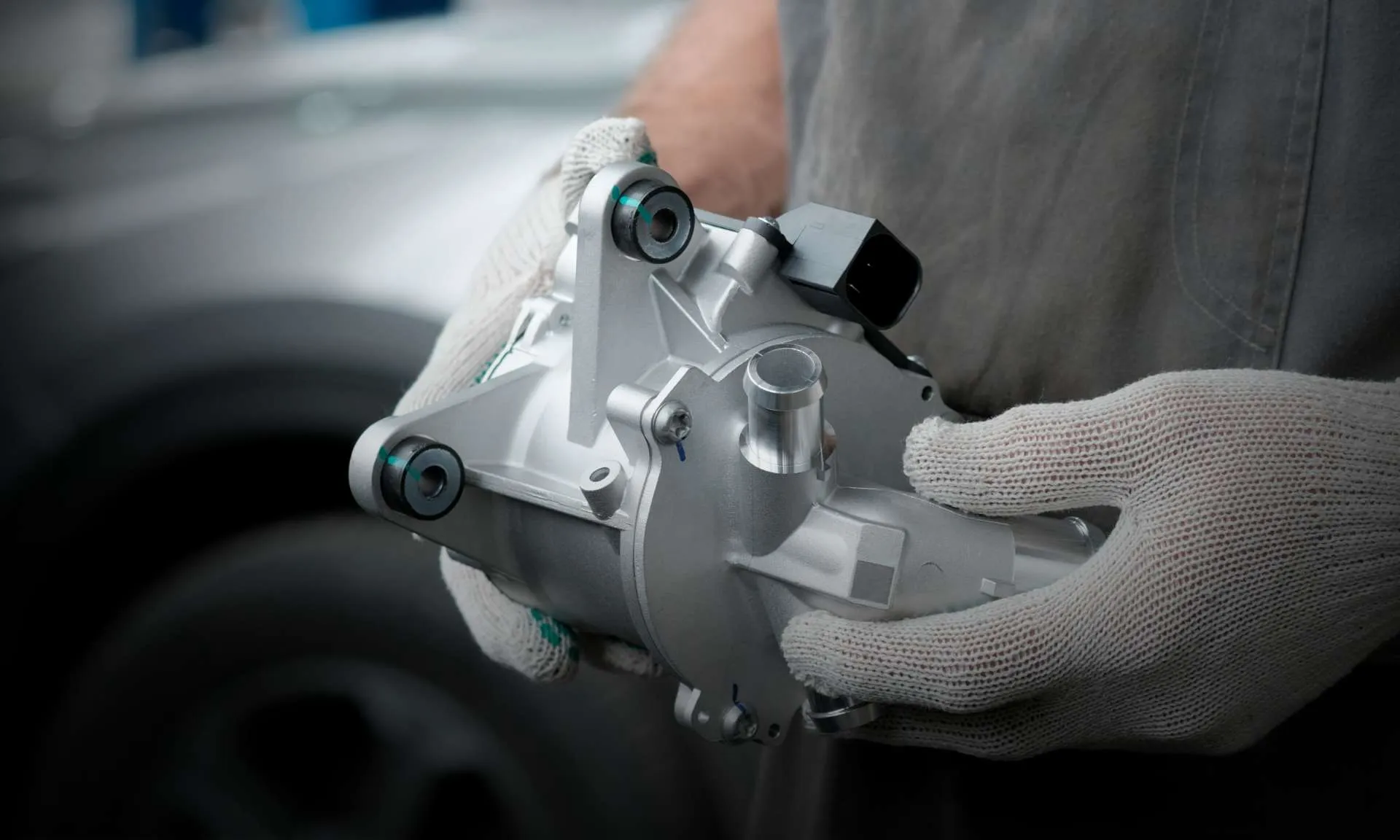
Car water pump: signs of failure and replacement
The temperature needle creeping into the red in traffic, a small coloured puddle under the car in the morning: a water pump rarely gives much warning. Yet it is what keeps the engine from overheating. On most cars the water pump is changed together with the timing belt, roughly every 80,000 to 100,000 km. This article covers what it does, and how to spot a failure.
If the temperature warning light comes on or you spot a coolant leak under the car, do not keep driving blindly: find your nearest MOTRIO garage and have the cooling system checked.
What does a water pump do and how to spot a failing one
The water pump circulates coolant through the engine to carry combustion heat to the radiator. Without that circulation, the temperature rises fast and the engine risks serious damage. It is usually driven by the timing belt, sometimes by the auxiliary belt.
Several signs give away a tired pump: the temperature light coming on or an unusually high needle, a coolant leak under the car or around the expansion tank, a bearing noise near the belt, or steam escaping from under the bonnet. A blue, green, orange or pink puddle under the car is usually coolant.
The most serious symptom is overheating: if the temperature runs away, it is best to stop as soon as possible to avoid damaging the head gasket and internal parts. The pump works alongside the radiator, the thermostat and the expansion tank, and knowing the different car belts helps you understand how it is driven. At normal running temperature the engine settles around 90°C.
The pump is part of a wider circuit. The coolant passes through the radiator, which cools it, while the thermostat controls the flow according to temperature and the fan steps in when needed. If one of these fails, the symptoms can look like a faulty pump, which is why a targeted check is useful.
A typical sign of a struggling pump is a whine or hum that changes with the engine speed, caused by a worn bearing. In other cases the temperature light appears only in traffic, when airflow is not enough to cool the radiator. A coolant level that drops with no visible leak is still worth a check.
On some recent cars the pump is electric and managed by the ECU, independent of the belt. Watch the coolant too: topping up with a different type or mixing incompatible colours can create deposits that clog the circuit and strain the pump.
When to replace a water pump
The pump wears slowly, but because reaching it means the same work as the timing belt, it is replaced at the same time as the belt. That interval generally falls between 80,000 and 100,000 km, or every 5 to 10 years depending on the manufacturer: always check your service book.
Changing the water pump at the same time as the belt, where recommended, rules out another breakdown soon after. It is a technical job, with bleeding of the system, best left to a professional; a vehicle service is a good moment to check the cooling system.
A few good habits prevent failures. Now and then check the level in the expansion tank with the engine cold, never open the cap when the engine is hot and stick to the coolant replacement intervals, as it loses its anti-corrosion properties over time. Using the coolant your manufacturer specifies protects the pump and seals.
If the temperature rises quickly, switch off the engine as soon as you safely can and do not carry on: driving with an overheated engine is the most common cause of serious head damage. At the garage, replacing the pump includes bleeding air from the system, a careful step that prevents new hot spots.
At the garage, besides the pump, the radiator, hoses, cap and thermostat are checked, as a leak can come from any of them. Replacing the pump and belt together, where specified, and using the correct coolant is the best way to avoid a second visit soon after.
Water pump and cooling system checks at a MOTRIO garage
MOTRIO garages, an independent network within Renault Group, check the cooling system, replace the pump and the timing belt kit with parts that meet your manufacturer's specifications and bleed the system to avoid hot spots, backed by a 1-year warranty on parts and labour.
If the temperature light comes on or you notice a leak, do not wait for overheating: book at your nearest MOTRIO garage for a check and a clear quote.