Timing belt replacement: when, why and how much it costs
There's one service that plenty of drivers keep putting off because the car runs perfectly. Timing belt replacement. The trouble is that this belt doesn't give you the usual warning signs, the way brake pads or shocks do. It works flawlessly right up until its last rotation, and if it fails, the consequences inside the engine are immediate.
What is a timing belt and why is it critical?
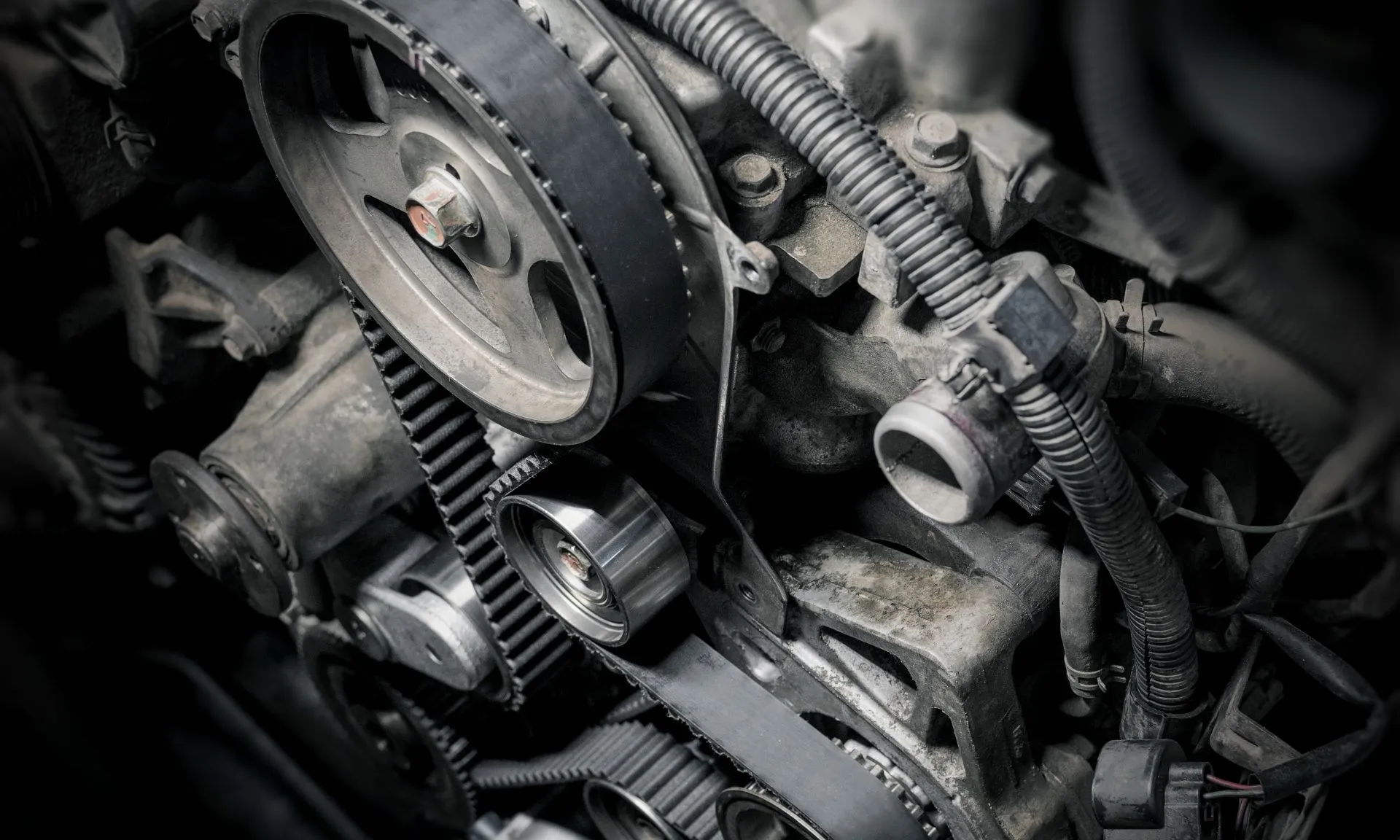
The timing belt, known in the UK as a cambelt, is the toothed belt that synchronises the movement of the crankshaft with the camshaft. In practical terms, it regulates the opening and closing of the valves in phase with the travel of the pistons. Every rotation is calculated to within a thousandth.
If the timing belt snaps or jumps a few teeth, the pistons keep moving but the valves no longer close at the right moment. The mechanical outcome is called interference. Pistons and valves collide. On almost all modern engines this causes structural damage to valves, valve guides, the cylinder head and often the pistons themselves. It's not a half-day fix. In most cases it means a full cylinder head rebuild, and sometimes a replacement engine makes more economic sense.
This is why timing belt replacement isn't negotiable. It has to be done before the belt fails, not when symptoms show up. Unlike brakes or suspension, the belt doesn't warn you. The only reliable criterion is the mileage and time interval specified by the manufacturer.
A quick note on terminology. Cambelt vs timing belt is simply a British vs international naming difference. Both words refer to the same component. If you want a broader overview of the different belts in your engine, the guide on car engine belts is a useful starting point. Some manufacturers have replaced the rubber belt with a timing chain, designed to last the life of the engine.
When to replace your timing belt and how much it costs
When to change timing belt intervals vary significantly between models. Between 50.000 and 75.000 miles on most modern petrol and diesel cars. Every 5 to 8 years in any case, even on low mileage cars. Rubber ages with time as well as use.
The precise figure for your car is in the owner's manual or service schedule, and it's genuinely worth sticking to. Going 10.000 miles early costs very little. Going 5.000 miles over the recommended interval can cost you the engine. Keeping a clear vehicle servicing history makes it easy to know where you stand.
The job almost never involves the belt alone. The proper technical standard is to replace the full timing belt kit. Belt, tensioners, idler pulleys and, very often, the water pump together (the timing belt and water pump combo), because the pump is driven by the same belt on the majority of engines. Fitting a new belt with old tensioners is a false economy that usually bites a few tens of thousands of miles later.
Labour times vary a lot, 3 to 8 hours depending on the engine and its accessibility. Timing belt replacement cost (or cambelt replacement cost, the same job) depends on several factors. Engine complexity, labour time, the price of the model specific kit, and whether the water pump is replaced at the same time. For an accurate estimate, request a quote from your garage, giving make, model, engine size and current mileage.
Timing belt replacement at a Motrio garage
Motrio garages carry out timing belt replacement using complete kits that meet manufacturer specifications, including water pump and tensioners where the engine design calls for them. Technicians follow the correct torque settings and timing procedures.
MOTRIO is the network of independent garages from the Renault Group, competent across all makes and models. If your car is approaching the interval set in the service schedule, or if it's been more than six years since the last replacement, book the job at your nearest Motrio garage and request a personalised quote.