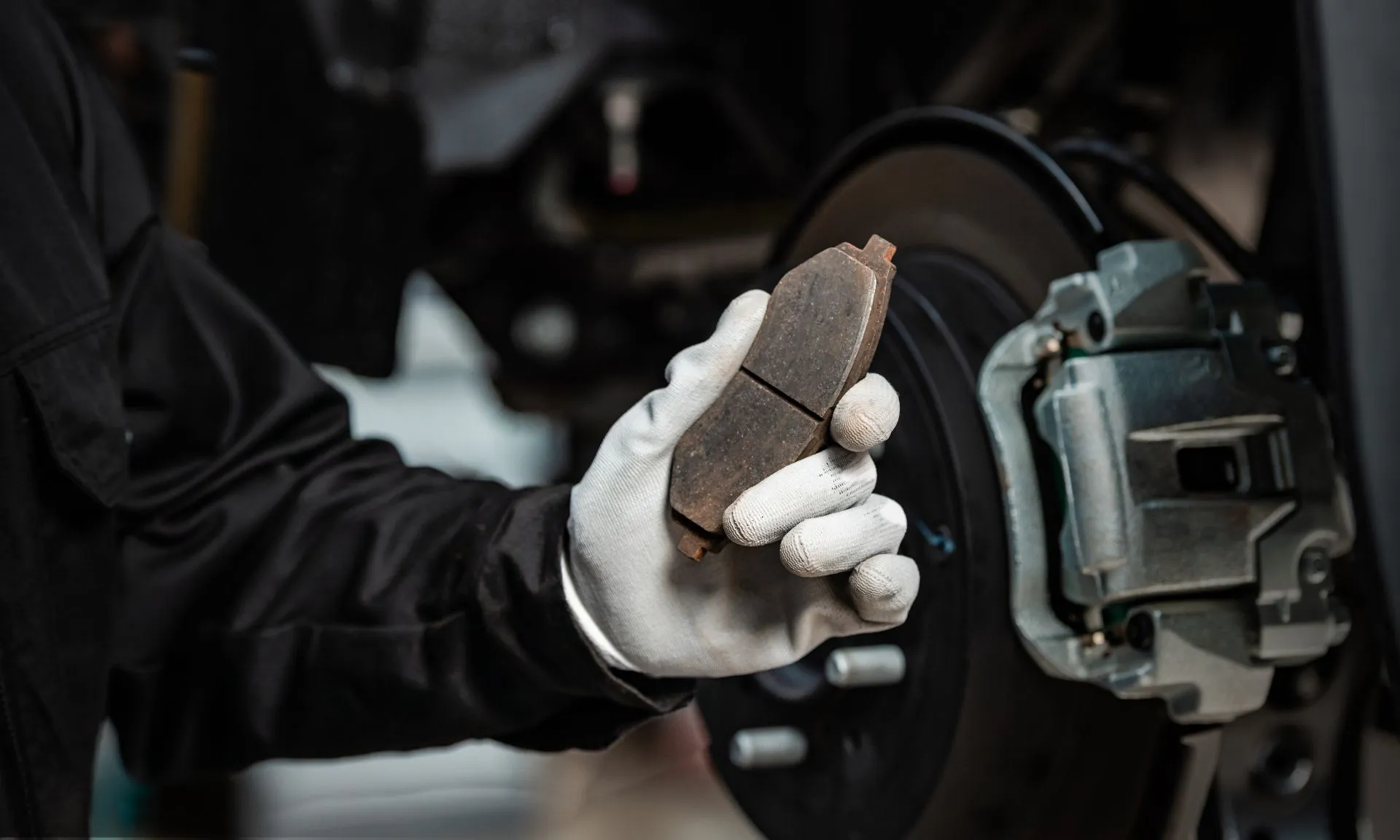
When to change brake pads: signs, lifespan and cost
There's one noise every driver learns to recognise sooner or later. A thin high-pitched squeal that appears when you touch the brakes, even gently. Sometimes it fades after the first few hundred yards, sometimes it doesn't. It's not a fault and it's not background noise. It's your squeaky brakes letting you know the pads are getting close to their limit.
How to tell if your brake pads are worn
Brake pads are the parts of the braking system that squeeze the disc to slow the wheel. They're consumable items. Every time you brake, a tiny amount of friction material wears away, and over time the compound runs out. As the minimum thickness approaches, the car sends several fairly consistent signals.
Typical signs that when to change brake pads is coming up soon include a metallic noise or sharp squeal under braking, a brake wear warning light on the dashboard, a less responsive brake with a pedal that travels further than usual, vibration through the pedal or steering wheel, and brakes grinding as a dull metallic sound at low speeds. The dashboard warning for brake wear is one of several lights you should never ignore, and the article on warning lights and icons in your car covers them in detail.
A visual check is very informative. With the wheel off, the remaining pad thickness can be measured directly. Below 3 mm of friction material, replacement should be planned. Below 2 mm it's urgent. Many garages perform this check without removing the wheel, by looking through the caliper opening.
In a balanced braking system, pads aren't the only component to monitor. The disc also wears down, more slowly, and when it drops below the minimum thickness it should be replaced with the pads. Brake fluid, if untouched for more than two years, deserves a parallel check for a complete and safe service.
How long do brake pads last and how much do they cost?
How long do brake pads last depends heavily on driving style and the type of roads you use. In town, with heavy traffic and frequent braking, front pads typically last between 15.000 and 25.000 miles. On motorways and open roads, where braking is less frequent but harder, the interval stretches to 30.000 or 45.000 miles. Rear pads generally last around twice as long as fronts, because they do less work.
These are averages. Spirited driving or heavy loads can halve pad life. Smooth anticipatory driving extends it considerably. Pad wear is also one of the most common items flagged during the annual MOT inspection checklist, so keeping ahead of it pays off at test time too.
Replacement is a fairly quick job. Typically 30 to 60 minutes per axle, unless a caliper is seized and needs rebuilding. The technician removes the wheel, opens the caliper, takes out the old pads, cleans the seats, pushes the piston back and fits new pads. Once the job is done, a short bedding-in period of a few dozen miles is recommended, with gentle braking while the new material mates to the disc.
Brake pads replacement cost and front brake pads cost depend on several variables. Vehicle segment, pad type (standard, low-dust, sport), whether discs also need replacing, the state of the calipers. For an accurate figure, it's best to request a quote from your garage after a quick visual inspection.
There's also a common question about aftermarket brake pads. Choosing non-original parts that meet manufacturer specifications is a widespread practice, often recommended by technicians as a way to keep costs down without compromising safety. Many aftermarket pads are produced in the same facilities as original parts and pass the same ECE R90 homologation standards. The quality and performance of aftermarket pads come very close to originals and are on a par with the leading premium manufacturers in the aftermarket.
Brake pad inspection and replacement at Motrio
Motrio garages carry out brake pad inspection during routine servicing and full pad replacement using original or equivalent parts depending on the vehicle. The inspection also covers discs, calipers and brake fluid.
MOTRIO is the network of independent garages from the Renault Group, with factory-trained technicians and expertise across all makes. If you're hearing brake noise, if the pedal feels less sharp, or if the wear light has come on, it's best not to delay. Book a brake inspection at your nearest Motrio garage.