Wheel alignment: what it is, when you need it and how much it costs
You're driving straight on the motorway and you notice your steering wheel is sitting slightly off-centre, or the car drifts to one side the moment you ease your grip. Maybe you've fitted new tyres and, a few thousand miles later, you're seeing odd wear patterns on the edges of the tread. In all three cases the likely culprit is the same. Your wheel alignment is out.
What is wheel alignment and why does it matter?
Wheel alignment is the set of angles that determines how your wheels sit in relation to the road and to the body of the car. There are three main angles (toe, camber and caster) and together they dictate how the car tracks, how the tyres wear and how precise the steering feels.
When alignment is within manufacturer tolerance the car behaves exactly as designed. It holds a straight line, the tyres wear evenly, the steering is crisp. When alignment slips out of spec, even by a few millimetres, the effects pile up quickly.
Common wheel alignment symptoms include a car pulling to one side when you lightly hold the steering wheel, a steering wheel sitting crooked in a straight line, uneven tyre wear with the inside or outside shoulder more worn than the centre, vague steering feel in corners, slightly higher fuel consumption. The causes are almost always mechanical. Kerb strikes, deep potholes, speed bumps taken too fast. Normal wear of suspension components can also shift the angles over time, just like the common car suspension problems you can prevent with regular checks.
It's worth clearing up a frequent confusion. Wheel balancing vs alignment are not the same thing. Balancing corrects the distribution of weight around a wheel and tyre assembly, which prevents vibrations at high speed. Alignment, on the other hand, adjusts the geometry of suspension and steering. Two different jobs.
Signs your car needs a wheel alignment
A wheel alignment check isn't tied to a fixed service interval. It should be carried out in specific situations. After fitting new tyres, so the fresh rubber starts with clean wear. After a hard impact against a kerb or a deep pothole. When you notice any of the symptoms above. Whenever suspension or steering parts have been replaced. As a general habit, once a year or every 10.000 to 12.000 miles for vehicles used heavily, and definitely when you switch to winter rubber following the winter tyres guide.
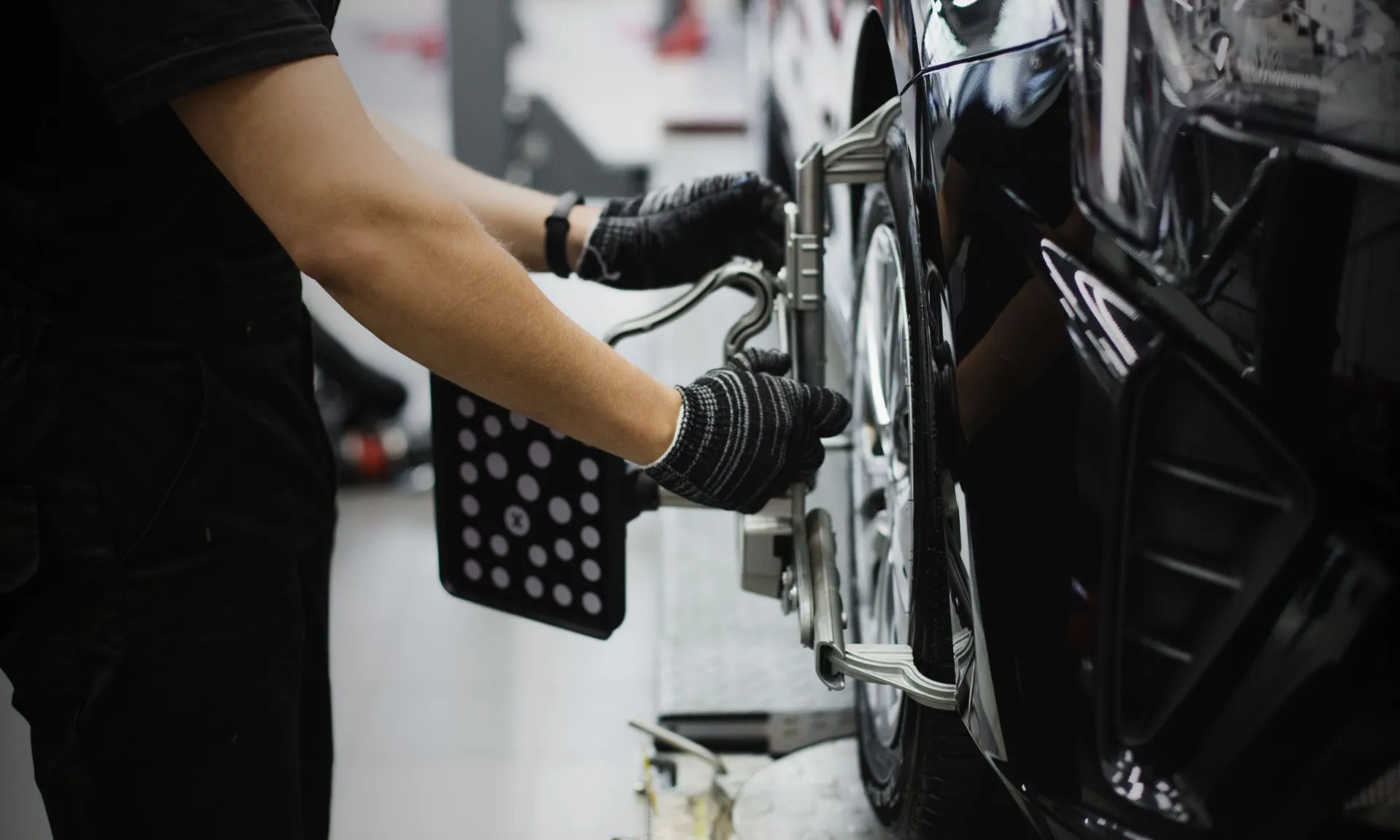
In the garage, alignment is measured on an electronic alignment rig that reads all three angles and compares them with the manufacturer's specification. The technician then adjusts the track rods, and where possible camber and caster, to bring the values back within tolerance.
The job usually takes around an hour, longer if other parts need inspection or replacement first. A search for wheel alignment near me will return plenty of options, but the quality of the result depends on two things. The state of your suspension and steering components, and the rig and expertise of the garage.
If track rod ends or bushings are worn, alignment simply won't hold. A good technician will flag this before starting the job. For an accurate wheel alignment cost, the best approach is to ask for a quote after a quick visual inspection, so the estimate reflects the real starting condition of your car.
Wheel alignment checks and adjustments at Motrio
Motrio garages carry out wheel alignment checks and adjustments on an electronic rig, with a preliminary inspection of suspension and steering components so the new settings will actually hold. This avoids the frustration of aligning a car that'll drift out of spec within weeks.
MOTRIO is the network of independent garages from the Renault Group, with technicians trained to manufacturer standards and experienced across all brands. If your car is pulling to one side, if you've just fitted new tyres, or if you've hit a nasty pothole, book a wheel alignment check at your nearest Motrio garage.