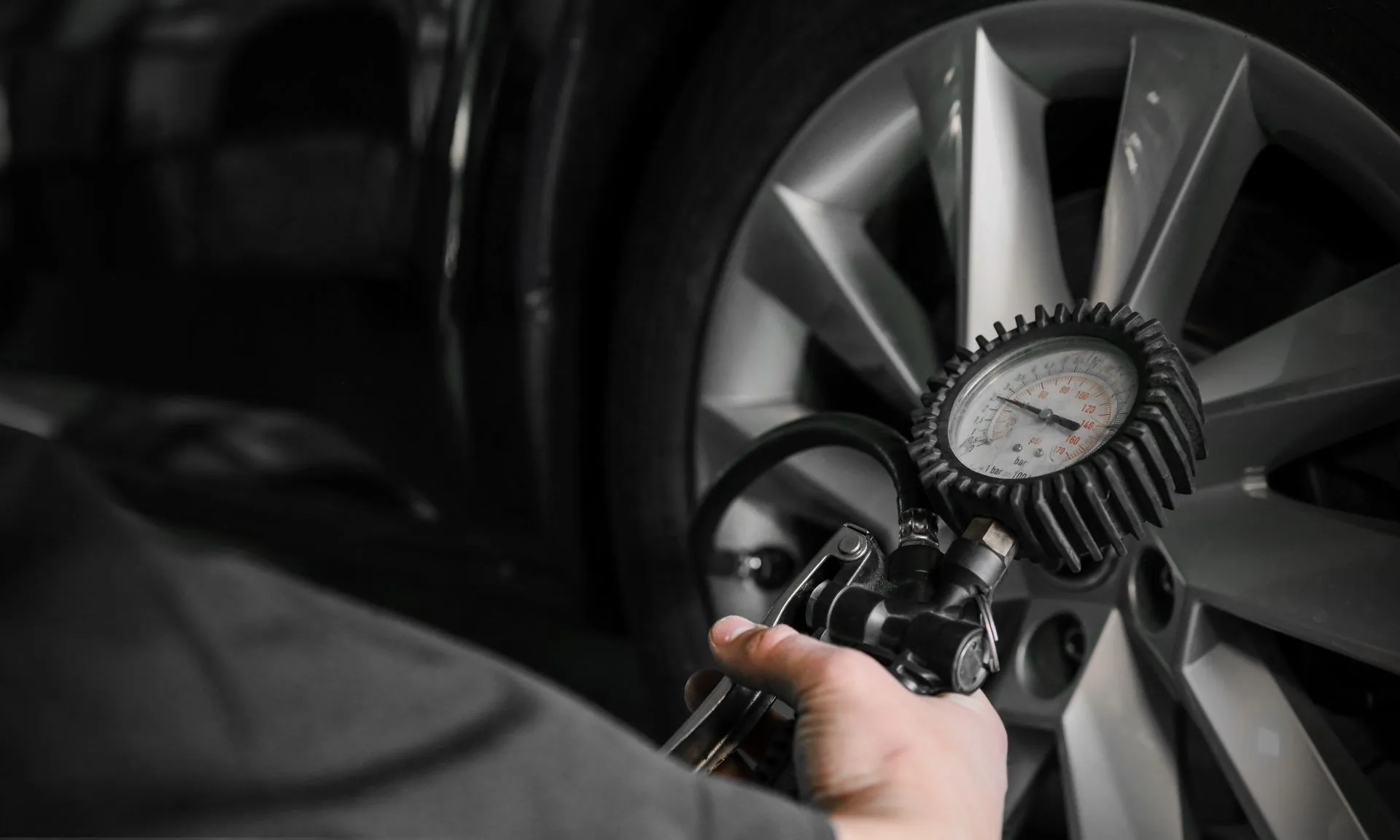
Tyre pressure check: how to do it and what values to use
You get into the car in the morning and the TPMS warning lights up on the dashboard. Or, after a long motorway run, the car feels a little less precise, as if it's "floating" in the corners. Tyre pressure is one of those things that affects your driving every single day, even when you don't notice it. A few tenths of a bar off is enough to hurt grip and push fuel consumption up. Let's look at why it matters, what the right values are and how to check it in just a few minutes.
Why is tyre pressure so important for safety and fuel efficiency?
Tyre pressure affects three things directly: road grip, fuel consumption and tyre life. An under-inflated tyre sits on a wider patch of road than it should, heats up faster and wears unevenly on the shoulders. Over-inflated, it only contacts the road in the middle of the tread, reduces the effective contact area and loses braking stability.
Fuel consumption follows the same pattern. Even 5 PSI below the recommended value (about 0.3 bar) can increase fuel use by 3 to 5%. Over a year of average driving, that's a meaningful amount of money spent for no reason.
Safety is the big one. A pressure that's too low increases stopping distance, particularly on wet roads, and makes the car more vulnerable to aquaplaning. A pressure that's too high reduces comfort and, in a pothole impact, exposes both the wheel and the tyre to damage. A regular tyre pressure check is one of the cheapest forms of preventive maintenance you can do.
The TPMS system (tyre pressure monitoring), mandatory on all new cars sold in the UK since 2014, is an ally, not a nuisance. If the warning light comes on, actually check the pressure — don't just reset the warning. A persistent TPMS warning sometimes points to a slow puncture that needs attention before it becomes a flat tyre. It’s also worth noting that a TPMS warning light on during an MOT test will result in an automatic fail, as it indicates the tyres are not correctly inflated.
How to check your tyre pressure and what values should you use?
How to check tyre pressure is straightforward, but the timing matters. The check should always be done cold — that is, after the car has been parked for at least two or three hours, or driven less than 2 miles at low speed. Measuring hot, after a motorway run, gives a reading that's 3 to 4 PSI (around 0.2-0.3 bar) higher than the real value: you risk deflating tyres that are actually correct.
What tyre pressure should my car be? The correct values are always in three places: the owner's handbook, a sticker on the driver's door pillar, and sometimes inside the fuel filler cap. The values depend on the model and the load, but for most UK hatchbacks and saloons they sit between 30 and 35 PSI (around 2.1-2.4 bar). SUVs and larger cars usually need between 33 and 38 PSI (around 2.3-2.6 bar). A car loaded with five passengers and luggage needs 2-4 PSI more than the standard value. Check my tyre pressure by reg services online can also give you the recommended values quickly.
To measure, you'll want a tyre pressure gauge: digital ones for home use cost between £15 and £40 and are very accurate. The free air machines at petrol stations work too, though the calibration can drift. Either way, check your tyre pressure at least once a month and always before a long trip. Don't forget the spare wheel, if your car still has one.
Free tyre pressure check at a Motrio garage
Motrio garages offer tyre pressure and condition checks as part of routine service, with a full inspection of tread depth (the UK legal minimum is 1.6 mm), uneven wear and wheel balancing. It's a quick visit that can make the difference between a confident drive and an unwelcome surprise.
Motrio is a network of independent garages backed by the Renault Group, with workshops across the UK and technicians trained to handle all tyre brands, from city cars to SUVs. If the TPMS light has come on or you haven't checked the pressure in a while, find your nearest Motrio garage and book a check: a few minutes is all it takes.