Car seat requirements UK: rules you need to know
Travelling with children in a car involves specific legal and safety responsibilities. In the UK, car seat requirements are designed to protect young passengers during everyday driving as well as in the event of sudden braking or a collision. However, these rules can sometimes feel complex, as they depend on a child’s age, height and the type of restraint used. Understanding how the regulations work helps parents and carers ensure children travel safely and in full compliance with UK law.
What are the UK car seat requirements?
Under UK law, children must use an appropriate car seat until they are 12 years old or 135 cm tall, whichever comes first. Once a child exceeds this height, they can legally use an adult seat belt, provided it fits correctly. This rule applies to all vehicles, whether you are using your own car, a taxi or travelling with friends and family.
Car seats used in the UK must meet approved safety standards. Currently, two main regulations apply: R44, which classifies seats based on a child’s weight, and R129 (i-Size), which is based on height and includes stricter testing requirements, particularly for head and neck protection. Parents often wonder what age does a child need a car seat – the answer depends on both age and height, but the key threshold is reaching 135 cm or turning 12.
The i-Size regulation requires children to travel rear-facing until at least 15 months old. This position is widely recommended for as long as possible, as it offers better support for the head, neck and spine during a frontal impact. Many parents ask when can a child face forward in a car seat – while 15 months is the legal minimum for i-Size seats, safety experts recommend keeping children rear-facing until they outgrow the seat’s height limits. In practical terms, a child must always use a car seat that matches their height and weight until they meet the legal requirement to travel without one.
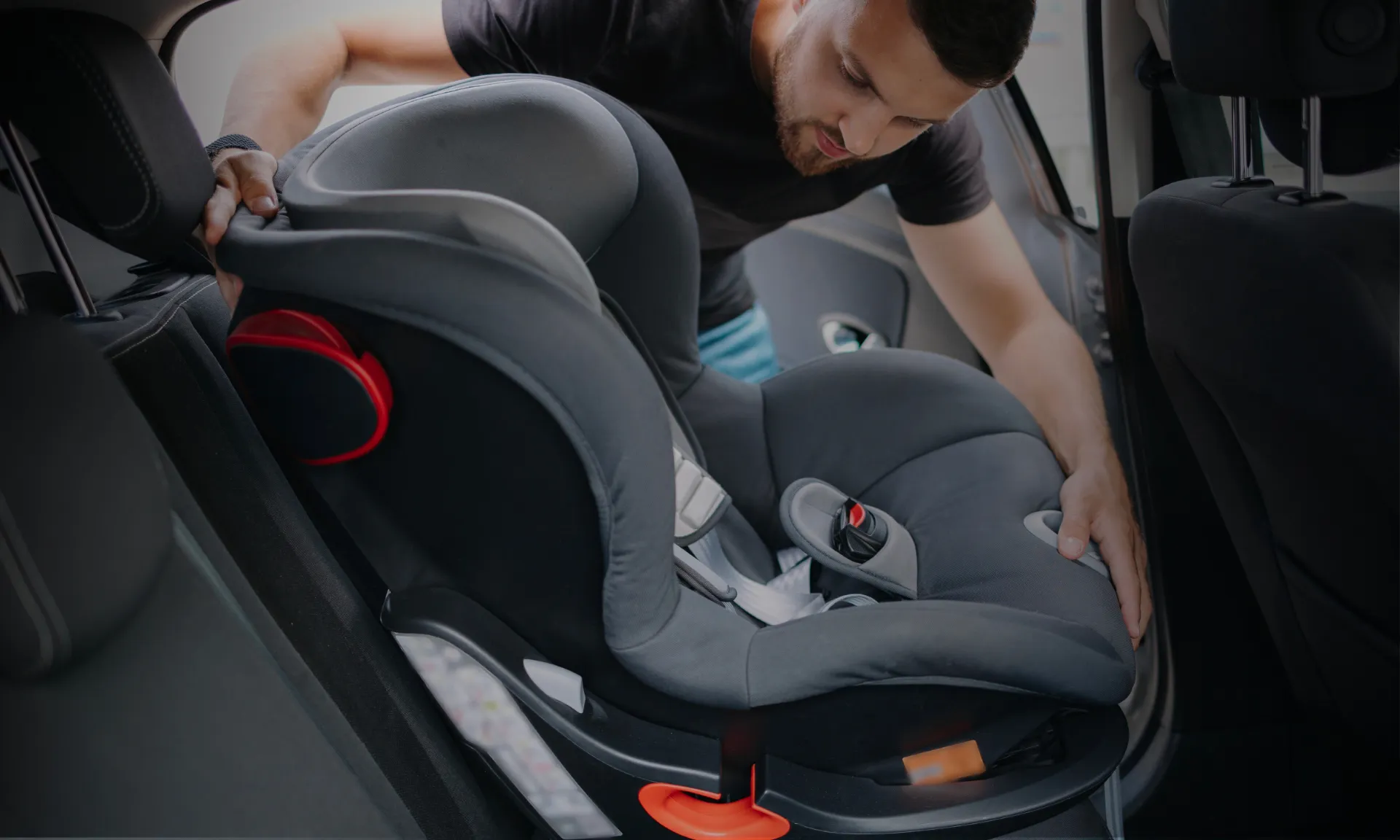
It is also important to remember that compliance is not just about choosing the right seat. A car seat must be installed correctly to be effective. Incorrect fitting, loose harnesses or improper use of Isofix points can significantly reduce the level of protection, even if the seat itself is approved.
Age, height and booster seat requirements
Understanding how age, height and booster seats work together is essential to meeting UK car seat requirements. While age offers general guidance, height is the key legal reference. Many parents search for how tall for a booster seat UK – children typically transition to a booster seat when they are around 100 cm tall, but this varies depending on the specific seat model.
Children who have outgrown a forward-facing car seat but are still under 135 cm must use a booster seat or booster cushion. These devices are designed to position the adult seat belt correctly, ensuring it lies across the shoulder and chest rather than the neck or abdomen. A common question is when can you use a booster seat – the answer is when a child has reached the minimum weight or height specified by the seat manufacturer, typically around 15 kg or 100 cm.
Parents frequently ask what age for a booster seat UK and whether younger children can use them. Questions like can a 4 year old use a booster seat depend entirely on the child’s size and the seat’s specifications. Under current regulations, backless booster cushions can only be used for children who are at least 125 cm tall and weigh more than 22 kg. For younger or smaller children, a high-back booster seat provides better protection by guiding the seat belt and offering side-impact support.
Important points to keep in mind include: booster seats should only be used once a child has outgrown their forward-facing seat; the seat belt must sit securely across the shoulder and hips; and children should normally travel in the rear seats, which provide greater protection in the event of a collision. A question many parents have is when does a child not need a car seat – once they reach 135 cm or turn 12, they can use an adult seat belt, but only if it fits properly across the chest and hips.
Another concern is how tall to not need a booster seat – the legal threshold is 135 cm, but some children may still benefit from a booster even after reaching this height if the adult seat belt does not fit correctly. The safest approach is to check that the belt sits on the shoulder and hip bones, not across the neck or stomach.
Vehicle condition also plays an important role in child safety. Even with the correct restraint, worn or inefficient brakes can increase stopping distances and the severity of an impact. Regular checks of essential safety systems help reduce risks for all passengers, especially children. In this context, professional services such as braking checks at Motrio help ensure that braking performance remains reliable in emergency situations.
Vehicle safety checks at Motrio
Child safety in the car depends not only on using the correct car seat, but also on the overall condition of the vehicle. Seat belts, anchorage points and braking systems must all work properly to provide effective protection in critical situations. A question like car seat in front seat – often asked by parents wondering about seating options – highlights the importance of understanding both legal rules and vehicle safety. While front seat use is legal in the UK for children in appropriate restraints, the rear seats remain the safest option, particularly when airbags are active.
At a Motrio garage, trained professionals can carry out vehicle safety checks focused on key components linked to passenger protection. Braking systems are inspected to ensure consistent stopping power, helping to reduce stopping distances and improve control in emergency situations. Seat belt mechanisms and anchorage points are also examined to confirm they meet the standards necessary for child restraint systems.
Parents often wonder when can my child stop using a booster seat, but equally important is ensuring the vehicle itself is safe for transporting children. Regular maintenance checks give peace of mind that all safety-critical systems are functioning correctly.
If you are unsure whether your vehicle is offering the right level of safety for travelling with children, professional advice is always recommended. Getting in touch with Motrio allows you to receive clear, practical guidance and ensure your car meets the necessary safety standards for everyday family journeys.