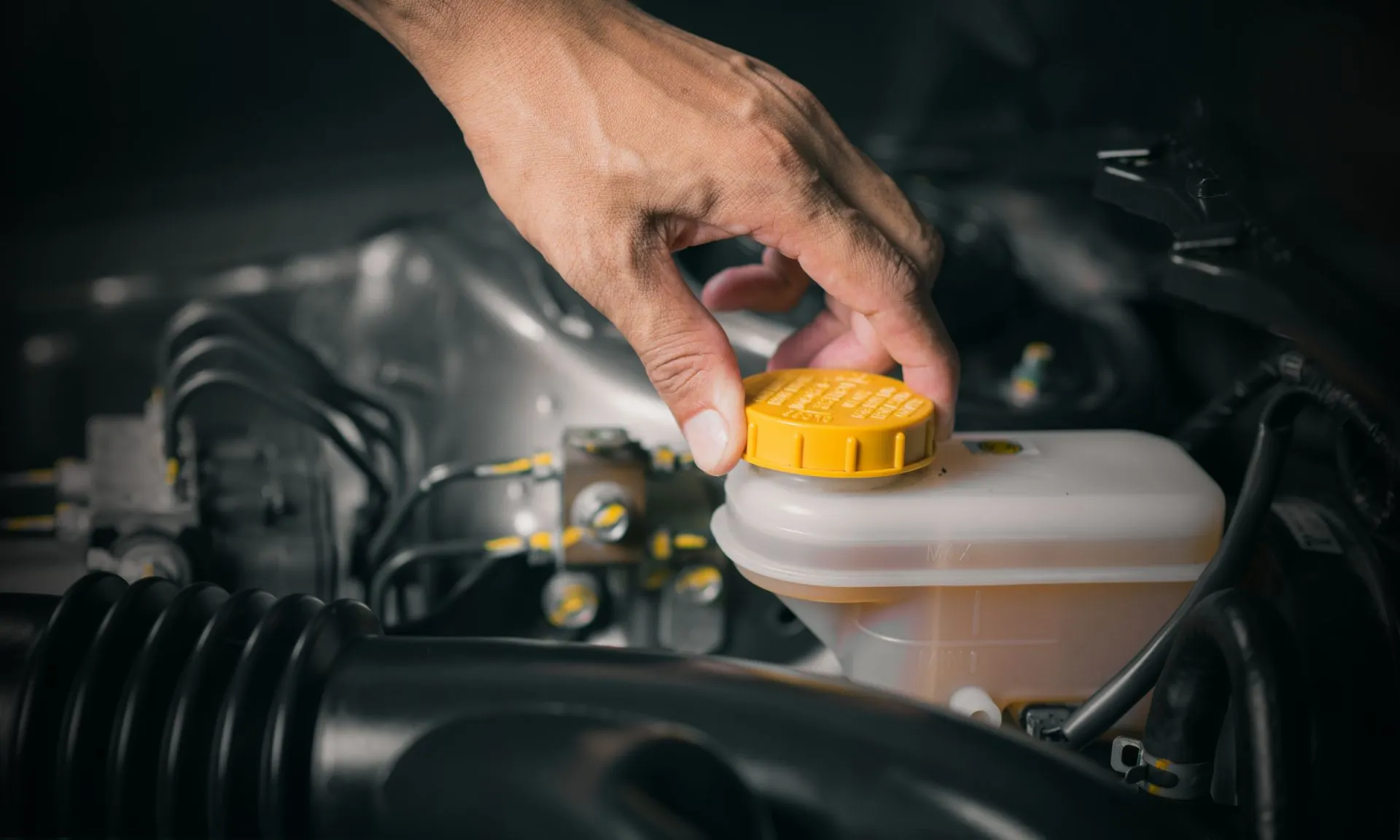
Brake fluid: when to change it and why it matters
You press the brake pedal and something feels off. The travel is a little longer than usual, the bite is softer, the car takes a touch more distance to stop. Often the problem isn't in the pads or the discs but in a part very few drivers check. The brake fluid. It's one of those quiet components that works faithfully for years, right up until it doesn't.
What is brake fluid and why does it need replacing?
Brake fluid is the hydraulic fluid that transmits the pressure from your pedal all the way to the calipers. It's what allows the pads to clamp the disc and slow the car down. Without the right level and a fluid in good condition, the pedal simply travels into thin air.
The tricky thing is that brake fluid is hygroscopic. It naturally absorbs moisture from the air over time, even inside a sealed circuit. The more water it contains, the lower its boiling point drops. During demanding braking, like long descents or heavy loads, the fluid can start to boil inside the circuit. Air bubbles form, the pedal goes spongy, braking loses bite.
Different specifications exist, identified by the DOT label followed by a number. Brake fluid DOT 4 is the most common standard on modern cars, but some models require DOT 5.1 or another specification set by the manufacturer. Using a non-compliant fluid can interfere with ABS and ESP systems.
Common low brake fluid symptoms and signs of tired fluid include a brake warning light on the dashboard, a softer pedal that sinks slightly further, longer stopping distances for the same pedal pressure, dark or cloudy fluid in the reservoir, and vibration under hard braking. Knowing your dashboard well helps you catch these early, as the article on warning lights and icons in your car explains in detail.
How often should you change brake fluid and what does it cost?
Unlike pads or tyres, brake fluid replacement doesn't follow mileage, it follows time. Most manufacturers recommend a brake fluid flush every two years, regardless of miles covered. Some brands extend this to three years on specific models, but the reference to follow is always your service book.
There are situations when bringing the change forward makes sense. A car used in very humid or coastal climates. A vehicle standing unused for long periods, where moisture still accumulates. After any work on the braking system such as calipers, brake lines or wheel cylinders.
The job itself is quick. A technician bleeds the circuit starting from the wheel furthest from the master cylinder, replaces the old fluid with fresh, and confirms there's no air left in the system. Typical duration is a little over half an hour for a standard car. Regular servicing is the best way to keep track of this and the rest of the braking system, as covered in the guide on vehicle servicing.
There are several brake fluid types on the market and several factors that influence the brake fluid flush cost. Car model, type of fluid required, complexity of the braking system. Cars with advanced electronics may need a specific bleeding procedure using a diagnostic tool, which takes more time than a traditional manual flush. For an accurate figure for your vehicle, the best approach is to ask your local garage for a quote.
Brake fluid check and replacement at a Motrio garage
Motrio garages check the condition of your brake fluid during routine servicing and carry out replacement using fluids that meet manufacturer specifications. The brake fluid check also covers brake lines, unions and wheel cylinders, so the whole circuit is assessed together.
MOTRIO is the network of independent garages from the Renault Group. Technicians trained to manufacturer standards, up-to-date diagnostic equipment, expertise across all makes and models. If it's been more than two years since your last brake fluid change, or if the pedal feels softer than it should, book a check at your nearest Motrio garage.