Blocked DPF? How to clean it
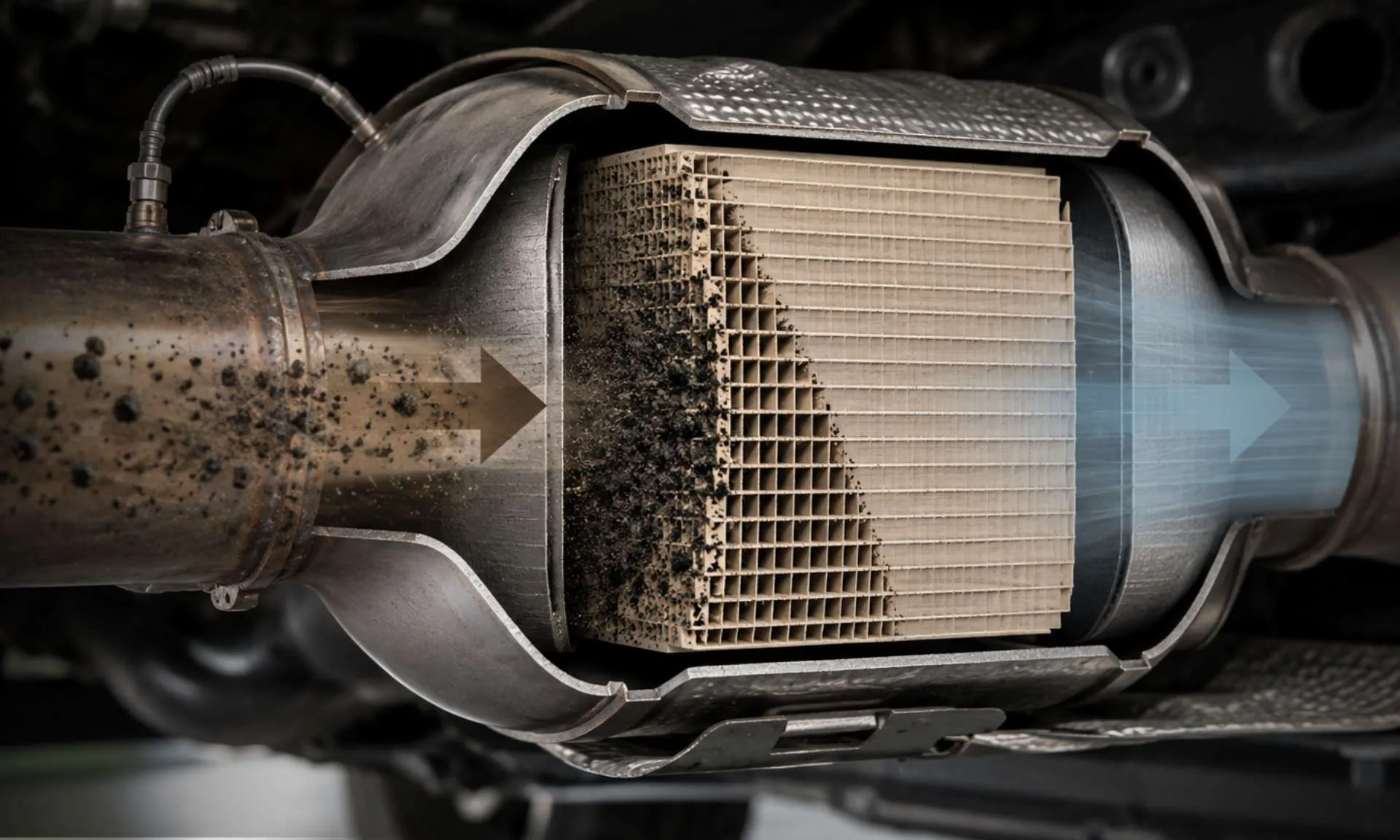
A warning light on the dashboard, a drop in power after a lot of short town trips: these are the classic signs of a blocked diesel particulate filter (DPF). Fitted to every recent diesel, the DPF traps over 99% of the soot particles produced by combustion. This article covers what it does, how to tell if it is blocked.
If the DPF light is on or you feel a loss of power, a check avoids costlier work: find your nearest MOTRIO garage and have the filter inspected.
What is a diesel particulate filter and how to spot a blocked one
The DPF is a filter on the exhaust line that captures the fine soot particles in diesel gases. It has been mandatory on Euro 5 diesels, so cars registered from 2011 onwards, and a petrol version (GPF) features on many recent direct-injection engines. By trapping the soot, it sharply reduces harmful emissions and supports a cleaner low-emission vehicle.
With use the filter fills with soot and must periodically clear itself through regeneration. When that process cannot complete, the filter blocks and symptoms appear: the DPF light on, a drop in power or limp mode, higher fuel consumption and sometimes an acrid smell.
The most common cause is mainly urban use: short, low-speed trips never let the filter reach the temperature it needs to regenerate. Most DPF problems come precisely from this kind of driving.
There are two types of regeneration. Passive regeneration happens naturally on the motorway, when the gases are already very hot; active regeneration is managed by the ECU, which injects extra fuel to raise the temperature. Repeatedly interrupting an active regeneration by switching off the engine is one of the most common causes of blocking.
Several factors raise the risk: mostly urban, cold trips, an unsuitable engine oil (it must be low-SAPS), frequent starts and faulty sensors. Driving with little fuel can also stop an active regeneration from starting. The typical symptoms remain a loss of power and rising fuel consumption.
Over time, besides soot (which burns off in regeneration), ash builds up, residue that does not clear and eventually saturates the filter: that is why, after many miles, replacement can become unavoidable. Repeatedly interrupted regenerations can also dilute the engine oil with diesel.
How DPF regeneration works
To burn off the trapped soot, the DPF must reach around 600°C. This regeneration happens on its own during faster driving: it usually takes 15 to 20 minutes on a dual carriageway or motorway. If you drive almost only in town, an occasional longer run helps the filter clean itself naturally.
When automatic regeneration is not enough, the work is done at a garage. A forced regeneration through diagnostics is often enough. If the filter is heavily blocked, off-car cleaning is needed. In the worst cases the DPF must be replaced.
Removing the DPF is illegal: it means an MOT failure, now stricter on particulates, and problems in clean air zones. Acting at the first symptoms, with a regeneration, costs far less than a replacement.
A few habits help prevent blocking: take regular longer runs at higher revs, use the low-SAPS oil your manufacturer specifies, do not ignore the light but drive a regeneration stretch, and keep enough fuel in the tank. Some models use a dedicated additive held in a small separate tank.
Forced regeneration and cleaning need diagnostics, so acting at the first signs pays off. Removing the DPF remains illegal, means an MOT failure and exclusion from clean air zones. At the garage the soot load is read and the right course of action is chosen.
At the garage, diagnostics read the soot load and back pressure to decide between forced regeneration, cleaning or replacement. Some models use an additive that lowers the soot's burn temperature: that small tank also needs topping up at the set intervals.
A practical tip: pay attention to how and where you drive. If your journeys are almost all short and urban, planning a longer run every couple of weeks gives the filter the chance to regenerate and clear the soot before it builds up. Keeping an eye on fuel consumption and the warning light lets you act early, while the fix is still a simple regeneration rather than a costly replacement.
DPF checks and cleaning at a MOTRIO garage
MOTRIO garages, an independent network within Renault Group, read the filter's data through diagnostics, carry out a forced regeneration or cleaning and, if needed, replace the DPF with parts that meet your manufacturer's specifications, backed by a 1-year warranty on parts and labour.
If the DPF light is on or your car is down on power, do not wait: book at your nearest MOTRIO garage for a diagnosis and a clear quote.